Get A Free Quote

2026 Top Car Elevator Platform Types for Global Buyers

Choosing the right Car Elevator Platform is no longer a simple equipment decision for global buyers. It affects parking capacity, building circulation, energy use, maintenance access, and daily user confidence. A compact residential project may need a hydraulic platform with steady lifting performance. A commercial garage may require a traction system, scissor mechanism, or automated parking integration. Each option creates different demands above and below ground.

Dr. Lee Gray, an elevator historian and industry researcher, offers a useful reminder: “An elevator is more than a machine; it is part of a building’s circulation system.” That principle matters when comparing platform structure, rated load, travel height, cabin dimensions, control logic, and emergency access. A platform carrying a large SUV needs more than attractive specifications. It needs stable guidance, accurate leveling, durable finishes, and clear maintenance procedures.

This 2026 guide examines the main Car Elevator Platform types available to international buyers. It considers hydraulic, traction, screw-driven, scissor, four-post, and automated solutions. It also looks at installation conditions, climate exposure, noise, power supply, and service support. These details often decide whether a system performs smoothly after installation.

The choice is not always obvious. A lower purchase price may hide higher maintenance costs. A technically advanced platform may be excessive for a small property. Some product data also appears incomplete, which deserves careful questioning. Buyers should verify load ratings, safety features, test documentation, warranty terms, and local approval requirements with qualified professionals. This guide provides direction, not a substitute for engineering review.
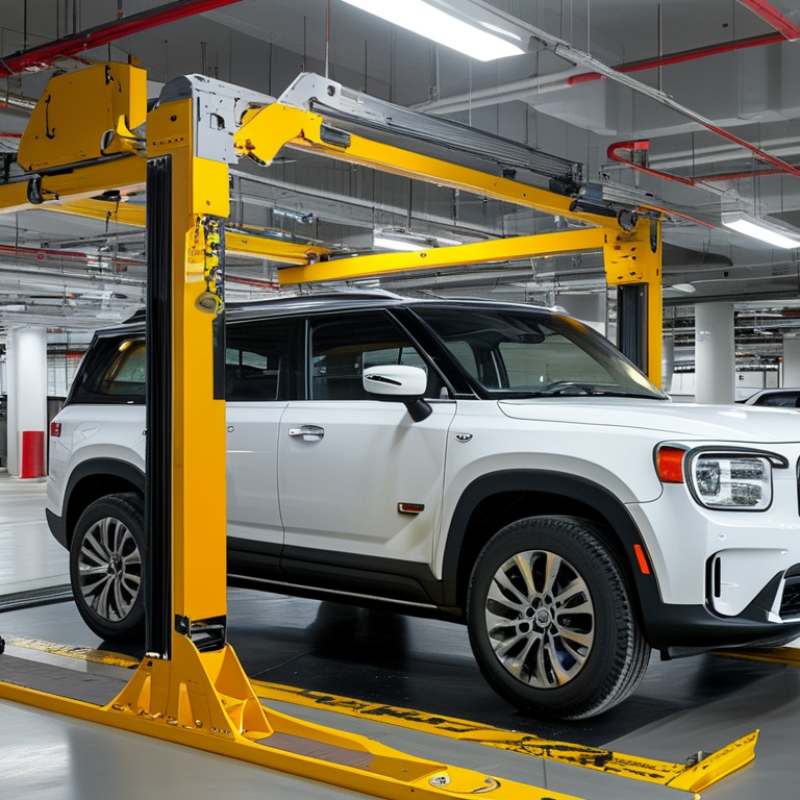
2026 Top Car Elevator Platform Types for Global Buyers

Car Elevator Platform Fundamentals: Capacity, Speed, Travel, Pit, and Headroom

2026 Top Car Elevator Platform Types for Global Buyers

Car elevator platforms are selected by more than vehicle size. Capacity must include the car, passengers, and a safety margin for dynamic loading. A 2,500-kilogram vehicle may require a platform rated above 3,000 kilograms. Dimensions also matter. Door clearance, mirror width, tire position, and turning space can change the specification quickly.

Speed affects daily convenience, but higher speed is not always better. Many low-rise systems operate around 0.10 to 0.30 meters per second. Travel distance depends on the number of floors and exact landing levels. Measure from the lowest loading floor to the highest stopping point, not from rough drawings. Small errors become expensive.

Pit depth and headroom often decide feasibility. A shallow-pit design may reduce civil work, but it can limit equipment options and maintenance access. Headroom must allow the platform, guide components, doors, and protective clearances above the highest landing. Site inspections frequently uncover beams, drainage pipes, or uneven floors that plans missed. They should be checked early. A buyer should request load calculations, emergency access details, noise data, and maintenance requirements. Local engineers must also confirm structural and electrical compliance, because platform layouts and safety rules differ between countries. Not every attractive specification fits a real building.

Hydraulic Platforms: 2,000–5,000 kg Loads for Low-Rise Installations

2026 Top Car Elevator Platform Types for Global Buyers

Hydraulic platforms suit low-rise buildings where cars move between ground level and one upper floor. They typically handle 2,000–5,000 kg loads. That range covers many passenger vehicles, vans, and heavier electric cars. The platform rises through hydraulic cylinders, guided by steel frames and safety interlocks. Travel is usually steady rather than fast. That trade-off matters in residential garages and small commercial sites.

Site conditions decide whether the system works well. A pitless design can reduce civil construction, especially during retrofit projects. However, it may require a short access ramp and careful drainage planning. The supporting slab must resist concentrated wheel loads, not only the total vehicle weight. Designers should also check platform width, overhead clearance, turning space, and local electrical requirements. Emergency lowering, mechanical locks, guarded edges, and limit switches deserve direct inspection.

Load figures can mislead buyers. A 5,000 kg rating does not excuse uneven loading or poor maintenance. Operators should center vehicles and avoid sudden braking on the platform. Hydraulic oil temperature, hose condition, seals, and locking devices need scheduled checks. Small leaks become serious problems. I would also question unusually low quotations. They may omit foundation work, commissioning, training, or future service access. Local engineers must verify structural calculations and applicable safety standards before installation, because low-rise does not mean low risk.

Traction Platforms: 0.3–1.0 m/s Speeds for Multilevel Parking

Traction platforms are becoming a practical option for multilevel parking, especially where land is limited. Their 0.3–1.0 m/s speed range supports steady vehicle movement without the abrupt feel of some hydraulic systems. A 0.5 m/s platform can lift a car through a three-level structure in roughly 20–30 seconds, depending on travel distance and door cycles. That difference matters during morning peaks.

The International Energy Agency reported more than 17 million electric cars were sold worldwide in 2024. Heavier vehicles and larger battery packs increase platform loading demands. Global buyers should therefore verify rated capacity, platform dimensions, guide-rail stiffness, and stopping accuracy together. A family SUV may fit the deck, yet its mirrors and charging equipment can reduce usable clearance. Small details matter.

The European standard EN 81-20 emphasizes door locking, emergency protection, and safe access conditions for lifting equipment. Traction systems also require disciplined inspection of ropes, sheaves, brakes, and control cabinets. In my assessment, 0.3–0.6 m/s often suits compact residential parking, while 0.8–1.0 m/s may support busier commercial sites. Faster is not always better. Noise, vibration, installation height, and maintenance access can weaken the real user experience. The Global EV Outlook 2024 also highlights continued growth in electric vehicle adoption, but parking designs still underestimate charging-space conflicts. That oversight deserves a second review.

Screw, Chain, and Scissor Types: 2,700–5,500 kg Duty Ratings

2026 Top Car Elevator Platform Types for Global Buyers

Screw, Chain, and Scissor Types: 2,700–5,500 kg Duty Ratings

Car elevator platforms now need more than attractive specifications. They must handle heavier SUVs, vans, and electric vehicles with stable load distribution. The IEA Global EV Outlook 2024 reported nearly 14 million electric cars sold worldwide in 2023. The U.S. EPA’s 2023 Automotive Trends Report placed average new-vehicle weight at about 4,156 pounds. These figures support choosing a working capacity above the vehicle’s curb weight.

A 2,700 kg platform suits many passenger vehicles. A 3,500–5,500 kg model offers more practical reserve for commercial vehicles and battery-heavy EVs.

Screw-driven platforms provide controlled movement and simple visual inspection. They usually fit projects needing moderate speed and precise positioning. Chain-driven systems can offer efficient vertical travel, but chain condition, lubrication, and synchronized movement require disciplined maintenance. Scissor platforms create a broad, stable deck and work well where side access matters. However, their pit depth and folded height can complicate installation.

Rated capacity is not enough. Engineers should verify axle loads, center of gravity, platform dimensions, duty cycles, and emergency lowering procedures. EN 1493 and ALI ALCTV guidance are useful reference points, although local codes still control approval.

Tips: Ask for a certified load chart, not only a brochure rating. Test the heaviest expected vehicle with realistic axle placement. I would also question unusually fast lifting claims; speed may reduce comfort, service life, or positioning accuracy. Leave room for imperfect parking habits. Real users rarely center every vehicle perfectly.

Global Buyer Checklist: EN 81-41, ASME A18.1, and Local Code Compliance

Global buyers evaluating car elevator platforms in 2026 should treat compliance as a design input, not a final certificate. UN DESA projects that 68% of the world’s population will live in cities by 2050. The IEA reported more than 17 million electric cars sold globally in 2024, increasing demands on parking capacity, vehicle weight, and fire planning. Vehicle dimensions are changing.

EN 81-41 can guide lifting platforms for persons with reduced mobility, but it may not alone certify a vehicle platform. ASME A18.1 addresses platform lifts and stairway chairlifts; confirm its exact applicability with the authority having jurisdiction. Do not assume compliance. Check pit depth, rated load, gate interlocks, emergency lowering, overspeed protection, drainage, and accessible controls. Then map every item against local structural, electrical, fire, accessibility, and seismic requirements. Some jurisdictions require separate approvals for buildings, machinery, and fire systems.

Ask the supplier for load calculations, risk assessments, test records, maintenance intervals, and site-specific installation drawings. Independent inspection matters. A platform carrying a 2,500-kilogram SUV needs different safety margins than one carrying a compact hatchback. That example is simple, perhaps too simple. Tire contact, battery location, water ingress, and door timing can change the risk profile. Use the IEA’s 2025 data as a demand signal, not a safety specification. Local code review remains decisive, especially for public parking and high-density developments.

crossmenu linkedin facebook pinterest youtube rss twitter instagram facebook-blank rss-blank linkedin-blank pinterest youtube twitter instagram