Get A Free Quote

2026 Top Quick Connect Fitting Types for Global Buyers?

Global buyers entering 2026 will evaluate Quick Connect Fitting types through performance, compatibility, and lifecycle cost. MarketsandMarkets’ industrial couplings research identifies growing demand for faster maintenance, modular equipment, and reduced fluid leakage. Grand View Research also links industrial component growth with automation, process efficiency, and expanding manufacturing capacity. These signals matter. A fitting is small, but a poor connection can stop an entire production line.

This guide examines hydraulic, pneumatic, cam-and-groove, dry-break, threaded, and food-grade Quick Connect Fitting designs. Each type serves a different operating reality. A hydraulic coupling may face high pressure and vibration. A pneumatic fitting may prioritize rapid tool changes. A dry-break model may protect sensitive fluids during hose separation. Buyers should verify working pressure, temperature range, media compatibility, sealing material, flow rate, and connection size before comparing prices. ISO 7241 and related international standards provide useful reference points, but certification needs careful checking.

Real-world selection is less tidy than product catalogs suggest. Corrosion, dust, uneven installation, and operator habits can change results. Sometimes the cheapest fitting becomes the costliest choice. That assumption deserves review. Reports from Mordor Intelligence and Fortune Business Insights indicate continued investment in industrial automation and fluid-handling systems, yet regional specifications and supply reliability still vary. Global buyers should request traceable test data, dimensional drawings, sample inspections, and replacement-part availability. The best 2026 choice will not simply connect quickly. It will remain secure, serviceable, and predictable under actual working conditions.
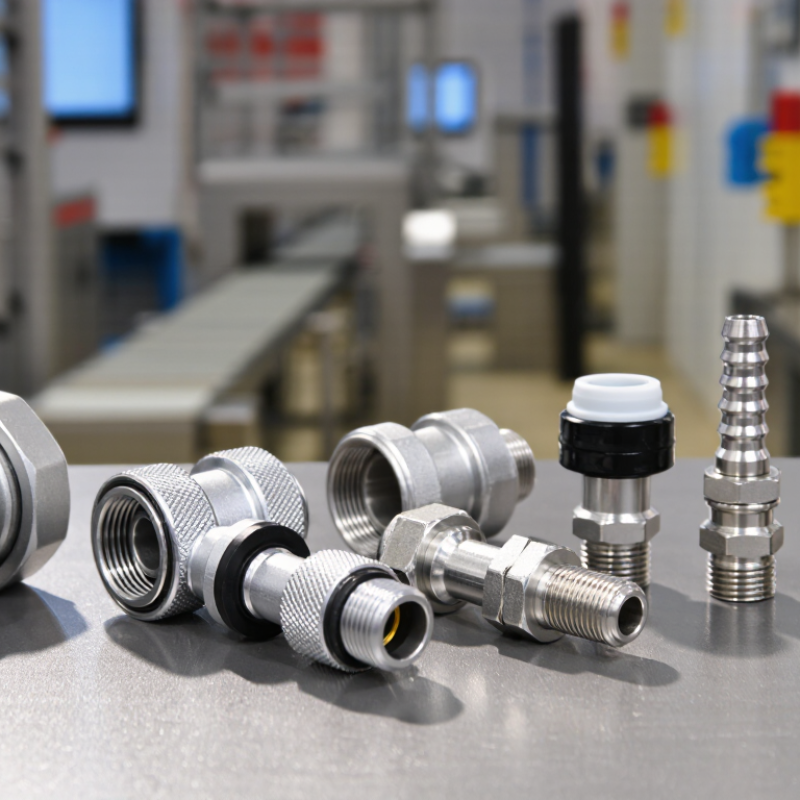
2026 Top Quick Connect Fitting Types for Global Buyers?

Quick Connect Fittings: Definition, Structure, and Operating Principles

Quick connect fittings link fluid or air lines without wrenches. Their structure is simple, but precision matters. A plug enters a socket, while locking balls, a sleeve, and springs hold the connection. Internal poppet or ball valves open when both halves engage. They close automatically after separation, limiting fluid loss and contamination.

Common types include poppet, ball-lock, and flat-face designs. Poppet couplings suit general hydraulic and pneumatic service. Ball-lock models offer fast manual connection. Flat-face fittings reduce trapped air and surface leakage, making them useful in mobile equipment. Grand View Research valued the global industrial valves market at approximately USD 78 billion in 2023, showing the scale of the valve systems surrounding these smaller components. The report also projects steady growth through 2030.

Operating pressure, temperature, media, and connection frequency determine the correct type. A stainless-steel body may resist corrosion, while an elastomer seal controls leakage around the plug. ISO 4414 principles also stress safe pneumatic design and controlled energy release. Practical inspection remains essential. Check sleeve movement, seal damage, and visible contamination before coupling. Small particles can scratch sealing surfaces. I have seen fittings fail early because users focused on thread size alone. That was an incomplete judgment. MarketsandMarkets identifies rising automation as a major driver for fluid-control components, yet published market figures vary by product definition. Buyers should verify test standards, flow ratings, and cycle-life data before comparing suppliers.

Major Quick Connect Fitting Types and Their Key Differences

2026 Top Quick Connect Fitting Types for Global Buyers?

Major Quick Connect Fitting Types and Their Key Differences

Quick connect fittings are not interchangeable by appearance. Ball-check couplings remain common in hydraulic equipment because they tolerate harsh handling and offer reliable sealing. However, their internal valves can create more pressure loss. Flat-face couplings reduce fluid spillage during connection and are easier to clean. They suit construction, agricultural, and mobile machinery. ISO 16028 is a useful reference for this design. Screw-to-connect fittings provide strong vibration resistance and dependable high-pressure performance. They take longer to operate, though.

Cam-and-groove couplings emphasize speed rather than maximum pressure. Operators can connect transfer hoses without tools, but these fittings usually require zero system pressure. Pneumatic quick connectors are lighter and support frequent tool changes. Their main concerns include airflow restriction, seal wear, and accidental disconnection. Small details matter. Thread standards, seal materials, temperature limits, and media compatibility should be checked together.

A 2024 Grand View Research report valued the global hydraulic fittings market at about USD 2.5 billion in 2023. It also projected growth near 5% annually through 2030. This suggests continuing demand, but market growth does not make every fitting suitable. Some buyers still select by nominal size alone. That is a costly shortcut. A better review compares working pressure, burst pressure, flow rate, corrosion exposure, and maintenance access. In practice, the “best” coupling may be slower, heavier, or less visually attractive. That deserves reflection.

2026 Top Quick Connect Fitting Types for Global Buyers: Major Types and Key Differences

Fitting Type How It Connects and Seals Typical Standards or Interface Key Advantages Important Trade-Offs Common Applications
Pneumatic push-to-connect tube fitting Push the tubing into the fitting; an internal collet grips it and an O-ring seals around it. A release collar allows tube removal. Tube outside diameter and thread type must match the fitting. Thread options commonly include metric, BSPP, BSPT, and NPT, depending on the market. Fast, tool-light installation; convenient for compact pneumatic circuits and frequent tube changes. Requires correctly sized, properly cut tubing. Tube material, pressure, temperature, and air-quality limits depend on the fitting design. Factory automation, pneumatic control panels, air lines, and instrumentation.
Pneumatic quick-action coupling A plug inserts into a socket and is retained by a locking mechanism; a valve in the socket commonly closes when disconnected. Common interface families include ISO 6150-B and other regional or industry-specific profiles. Profiles that look similar are not necessarily interchangeable. Quick connection and disconnection of air tools and hoses; many designs allow single-handed operation. Flow capacity and pressure drop vary by profile and size. Disconnecting under pressure can cause noise, hose movement, or a pressure release. Compressed-air tools, workshop hoses, and pneumatic equipment connections.
Hydraulic poppet-type quick coupling Connecting the two halves opens internal poppet valves; disconnecting them typically closes both sides to limit fluid loss. Commonly selected by a defined interface such as ISO 7241 Series A or Series B. The series and size must match. Established option for hydraulic circuits; available in multiple sizes and connection configurations. Some residual fluid loss and air inclusion may occur during connection or disconnection. Poppet valves can create pressure drop. Mobile machinery, agricultural equipment, and general hydraulic lines.
Flat-face hydraulic quick coupling Flat mating faces connect together, usually with a locking sleeve or similar mechanism; valves open when coupled. ISO 16028 is a widely used interface specification for flat-face hydraulic quick-action couplings. Designed to reduce fluid spillage and make exposed faces easier to wipe clean; useful where contamination control matters. Faces must be kept clean and correctly aligned. Coupling under trapped pressure may be difficult unless the design permits it. Construction and agricultural equipment, hydraulic attachments, and applications requiring cleaner disconnection.
Screw-to-connect hydraulic coupling The halves are joined by rotating a threaded sleeve or coupling nut; the locking action is mechanical rather than a simple push connection. Specified by the applicable coupling design, thread, size, and pressure rating; verify the manufacturer’s interface and dimensional documentation. Threaded engagement can resist accidental separation and may allow connection in demanding hydraulic service. Connection takes longer than a push-to-connect design. Threads need protection from dirt and damage, and correct tightening is important. High-vibration or heavy-duty hydraulic equipment, including some machinery and attachment circuits.
Dry-break fluid-transfer coupling Purpose-designed internal valves open when the halves are joined and close during separation to minimize release of the transferred fluid. Often supplied to a specific equipment or process interface; confirm the exact mating profile, valve arrangement, and operating conditions. Helps reduce spills and fluid exposure during repeated transfer connections. Usually requires exact mating halves. “Dry-break” performance is design-specific and does not mean zero leakage in every condition. Chemical, fuel, lubricant, and other liquid-transfer systems where spill control is important.
Automotive fuel-line quick connector A molded connector locks onto a tube or fitting using retaining tabs or a clip and seals with internal elastomer seals. Connector dimensions and retention features are application-specific; SAE J2044 covers certain fuel-system quick-connect couplings. Supports rapid assembly and service of fuel lines without conventional threaded joints at the connection point. Must be matched to the specified fuel, temperature, pressure, tube, and retention geometry; release procedures vary by design. Automotive and small-engine fuel delivery or vapor-management lines, where specified.
Coolant and low-pressure fluid quick coupling Often uses a push-in or sleeve-lock mechanism with an elastomer seal; shutoff valves may be included or omitted. Typically application-specific. Confirm the fluid, hose or tube dimensions, seal material, and mating profile rather than relying on appearance. Speeds up maintenance connections for coolant, water, and compatible low-pressure fluids. Temperature and chemical compatibility are seal-dependent. Not every coolant coupling has automatic shutoff or spill-control valves. Equipment cooling circuits, laboratory systems, and selected industrial fluid lines.

Buyer’s note: Select a fitting by fluid, operating pressure and temperature, flow requirement, connection size, seal material, and applicable interface standard. Matching nominal size alone does not ensure interchangeability; verify the exact profile, thread, valve arrangement, and pressure rating before ordering.

Materials, Size Standards, and Connection Options for Global Buyers

Global buyers should match quick connect fitting materials to pressure, temperature, fluid, and installation conditions. Stainless steel suits corrosive environments and repeated washdowns. Carbon steel handles demanding hydraulic service when protected against rust. Brass works well in many pneumatic and moderate-pressure systems. Engineering plastics reduce weight, but heat and impact limits require careful review. Seal materials matter too. Nitrile supports common oils, while fluorocarbon compounds tolerate higher temperatures and aggressive fluids.

Size standards can create costly confusion. Hydraulic couplings commonly reference ISO 7241 or ISO 16028, especially for general and flat-face designs. Pneumatic fittings may use metric tube sizes or inch-based measurements. Threads can be BSPP, BSPT, NPT, or SAE O-ring. They are not automatically interchangeable. Fit is not universal. Measure twice. Buyers should confirm thread form, nominal size, flow rating, working pressure, and allowable leakage before ordering. A 1/4-inch fitting and a similar metric fitting may look almost identical, yet fail during assembly.

Connection options include threaded, push-to-connect, screw-to-connect, and flat-face couplings. Push-to-connect designs speed installation and maintenance, but they need clean, correctly sized tubing. Flat-face couplings reduce fluid loss and contamination during frequent connection. Screw-to-connect types resist accidental separation under vibration, though they take longer to operate. Coupling halves should also be checked for interchangeability, locking method, seal replacement, and test documentation. A catalog claim is not enough. Regional standards, equipment tolerances, and real operating cycles can expose weaknesses that laboratory data misses.

2026 Top Quick Connect Fitting Types for Global Buyers

Reference comparison of common hydraulic quick-connect size families, material choices, connection methods, and international dimensional standards.

Fitting Types

ISO 7241 poppet-style couplings are widely used for general hydraulic circuits, while ISO 16028 flat-face couplings are preferred where low-spill connection and easier cleaning are important.

Materials

Carbon steel is common for general industrial service, stainless steel is selected for corrosion resistance, and brass is frequently used in lower-pressure pneumatic, water, and general-purpose applications.

Connection Options

Buyers commonly specify female and male threaded ends, hose-barb ends, push-in connections, and flange adapters. Thread selection should be confirmed as BSP, NPT, or metric according to the installation market.

The chart compares nominal tube outside-diameter reference sizes. Metric and inch sizes shown in the same group are dimensional references, not automatically interchangeable connections. Always verify the coupling series, seal material, pressure rating, thread standard, and applicable ISO specification before ordering.

How to Select Quick Connect Fittings for Pressure, Media, and Temperature

Choosing quick connect fittings in 2026 requires more than matching thread size. Pressure, media, and temperature must work together. A fitting rated for 300 psi at room temperature may handle less at elevated heat. Check the working pressure, burst pressure, and pressure changes during cycling. Static systems are easier. Pulsing systems need more caution.

Media compatibility starts with the fluid, not the fitting body. Water, oil, coolant, compressed air, and aggressive chemicals affect metals and seals differently. Stainless steel may resist corrosion, while certain elastomers can swell or crack. Confirm compatibility charts with technical documents. Do not rely on appearance. Some fittings look identical.

Temperature also changes sealing performance. Low temperatures can harden seals, while heat can soften them. Consider the highest operating temperature, cleaning temperature, and surrounding heat. If steam or hot washdown is involved, verify the complete assembly rating. The hose may fail before the connector. That detail is often missed.

For global buyers, require clear drawings, test records, and traceable material information. Check thread standards and sealing methods before ordering samples. A fitting can connect correctly and still leak under vibration. In field inspections, technicians often find contamination inside unused couplers. Keep protective caps installed. I would also test the actual media whenever possible. A neat selection sheet can still hide an incorrect assumption. Recheck it.

International Sourcing, Quality Checks, and Compliance Considerations

2026 Top Quick Connect Fitting Types for Global Buyers?

For 2026 sourcing, buyers should compare hydraulic screw-to-connect, ISO 7241 interchange, flat-face ISO 16028, and pneumatic quick-connect fittings. Each type serves different pressure, contamination, and maintenance needs. A 2024 MarketsandMarkets assessment forecasts the quick disconnect couplings market to grow at about 5% annually through 2028. That growth reflects wider use in mobile machinery, factory automation, and fluid-service equipment.

International sourcing needs more than a low unit price. Request material certificates, pressure-test records, batch traceability, and dimensional inspection reports. Check thread standards carefully, including BSP, NPT, and metric forms. A fitting may look correct but still leak after thermal cycling. Use ISO 7241 or ISO 16028 requirements when applicable. For pneumatic applications, verify ISO 6150 compatibility and working pressure. Compliance reviews should cover REACH, RoHS, chemical declarations, and destination-market labeling. These checks reduce customs delays and field failures. They do not remove every risk.

Tips: Ask suppliers for three samples from separate production batches. Test flow loss, coupling force, seal performance, and corrosion resistance. Use independent laboratories for high-risk applications. I have seen polished samples hide inconsistent plating. My own inspection plans are not flawless. Recheck them after the first shipment. Keep records with photos, lot numbers, and signed test results. That small discipline often matters more than attractive packaging.

crossmenu linkedin facebook pinterest youtube rss twitter instagram facebook-blank rss-blank linkedin-blank pinterest youtube twitter instagram