Get A Free Quote

7 Best Electric Cargo Bikes for Global Buyers?

Choosing an electric cargo bike is rarely as simple as comparing motor power or battery size. Global buyers face different roads, climates, service networks, and family needs. A model that feels stable on Amsterdam’s cycle lanes may feel awkward on a narrow, uneven street elsewhere. That difference matters.

Urban mobility expert Mikael Colville-Andersen once called the cargo bike “the Swiss Army knife of bicycles.” The phrase is memorable, but it needs practical testing. A useful electric cargo bike should carry real weight without feeling nervous during turns. It should climb familiar hills, fit through storage doors, and remain comfortable after several daily trips. Buyers should also inspect braking performance, frame strength, weather protection, battery availability, and local repair support.

This guide reviews seven electric cargo bike options for international buyers. The selection considers both specifications and everyday ownership. We look at long-tail and front-loading designs, compact frames, motor behavior, useful range, payload ratings, and component quality. A bike may advertise impressive capacity, yet its accessories can be expensive or difficult to replace. That is easy to overlook.

No single model suits every rider. Some choices prioritize children, while others favor deliveries, groceries, or apartment storage. Our comparisons aim to be clear, practical, and honest about compromises. Test conditions also vary. Results can change with rider weight, temperature, hills, tire pressure, and cargo placement. That uncertainty deserves attention before purchase. A careful buyer should treat every shortlist as a starting point, not a final answer.
7 Best Electric Cargo Bikes for Global Buyers?

What Defines an Electric Cargo Bike for International Buyers

What Defines an Electric Cargo Bike for International Buyers

An electric cargo bike is more than a bicycle with a large box. Buyers should assess payload, total permitted weight, cargo space, turning radius, braking performance, and battery range under load. A bike carrying groceries on flat pavement faces different demands from one hauling tools up wet hills. Small details matter. Check whether the battery can be removed for charging, whether common service parts are available locally, and whether the frame fits the intended storage space. The motor’s rated output and assistance settings also need to match local requirements; these vary between markets, so verify them before ordering.

Use data as context, not a promise. The EU-funded Cyclelogistics project estimated that bicycles could replace about 51% of motorized trips involving goods in European cities. That figure describes potential, not every route or buyer. It does not account for steep terrain, extreme weather, or a rider’s actual load.

That distinction matters. For an international purchase, compare published range and payload figures with realistic conditions, then ask how each was measured. A manufacturer’s maximum range may assume a light load and gentle terrain. I would also check battery transport documentation, warranty coverage across borders, and access to trained repair support.

One uncomfortable question remains: will the bike still be useful when the first replacement part is needed?

Key Features to Compare Across Electric Cargo Bike Models

Choosing an electric cargo bike starts with the load, not the motor. Check the rated capacity for the rider, cargo, and any child seats together. Then compare the bike’s length and turning circle with your storage space and usual routes. A long frame can feel steady on open roads, but awkward in a narrow lift or crowded bike room.

Battery capacity can help compare models, but it does not predict range by itself. Rider weight, hills, temperature, tire pressure, and frequent stops all affect energy use. Look for clear battery specifications and a removable battery if you need to charge indoors. Brakes deserve equal attention: a fully loaded bike needs predictable stopping, especially on wet streets. Test it loaded. If possible, ride over a small bump and try a tight turn. Comfort is easy to overlook in a short showroom test.

Tips: Compare the permitted payload, not just the advertised carrying space. Ask about replacement parts, service access, and battery warranty in your region. Take your regular route for a test ride; a hill or rough patch may reveal more than a smooth parking lot. I would still treat claimed range as an estimate, not a promise.

7 Best Electric Cargo Bikes for Global Buyers? — Key Features to Compare Across Electric Cargo Bike Models
Cargo-bike configuration Typical cargo rating Common motor class Typical battery capacity Indicative assisted range Typical wheel setup Best suited to Key trade-off
Compact longtail About 40–60 kg on the rear rack 250–500 W nominal, depending on local regulations About 400–600 Wh Roughly 35–80 km per charge Usually 20–24 in. wheels Urban errands, one child, and riders with limited storage space More maneuverable than a long box bike, but has less room for bulky loads.
Full-size longtail About 60–100 kg on the rear rack 250–750 W nominal, depending on local regulations About 500–800 Wh Roughly 35–90 km per charge Commonly 20–26 in. wheels Family transport, panniers, and larger weekly shopping trips Can carry substantial rear loads, but passenger accessories and frame size add weight.
Two-wheel front-loader (long-john style) About 80–150 kg in the front cargo area 250–750 W nominal, depending on local regulations About 500–1,000 Wh Roughly 30–80 km per charge Often a 20 in. front wheel and 26 in. rear wheel Children, large grocery loads, and riders who want cargo visible from the saddle Offers a large load area but has a longer wheelbase and takes practice to steer when loaded.
Three-wheel cargo trike About 80–150 kg in the cargo area 250–750 W nominal, depending on local regulations About 500–1,000 Wh Roughly 25–70 km per charge Three wheels, commonly 20–24 in. Stable, lower-speed carrying on relatively flat routes Stands securely when stopped, but is wider and can handle corners differently from a two-wheel bike.
Compact front-loader About 50–100 kg in the front cargo area 250–500 W nominal, depending on local regulations About 400–700 Wh Roughly 30–75 km per charge Often 20 in. wheels Dense cities where a shorter cargo bike is easier to park and store More compact than a long-john design, with a smaller cargo area.
Folding cargo bike About 30–60 kg on the rack or cargo platform 250–500 W nominal, depending on local regulations About 300–600 Wh Roughly 25–70 km per charge Usually 16–20 in. wheels Mixed commuting, apartment storage, and trips involving public transport Folds for storage, but generally carries less than full-size cargo designs.
Heavy-duty commercial cargo bike About 100–200 kg in the cargo area; verify the rated limit 250–1,000 W nominal, subject to local vehicle rules About 600–1,500 Wh, sometimes using dual batteries Roughly 25–80 km per charge Varies; commonly 20–26 in. wheels Frequent deliveries, trade work, and high-volume carrying Designed for heavier work, but higher weight, cost, and charging needs may reduce everyday convenience.
Comparison note: These are typical configuration ranges, not specifications for individual products. Actual cargo limits, motor ratings, and assisted range vary by model, rider and load weight, terrain, temperature, assist level, and local regulations. Confirm whether a stated load limit includes the rider, and check local rules for motor power, assisted speed, throttle use, and road access before buying.

Seven Leading Electric Cargo Bikes for Different Transport Needs

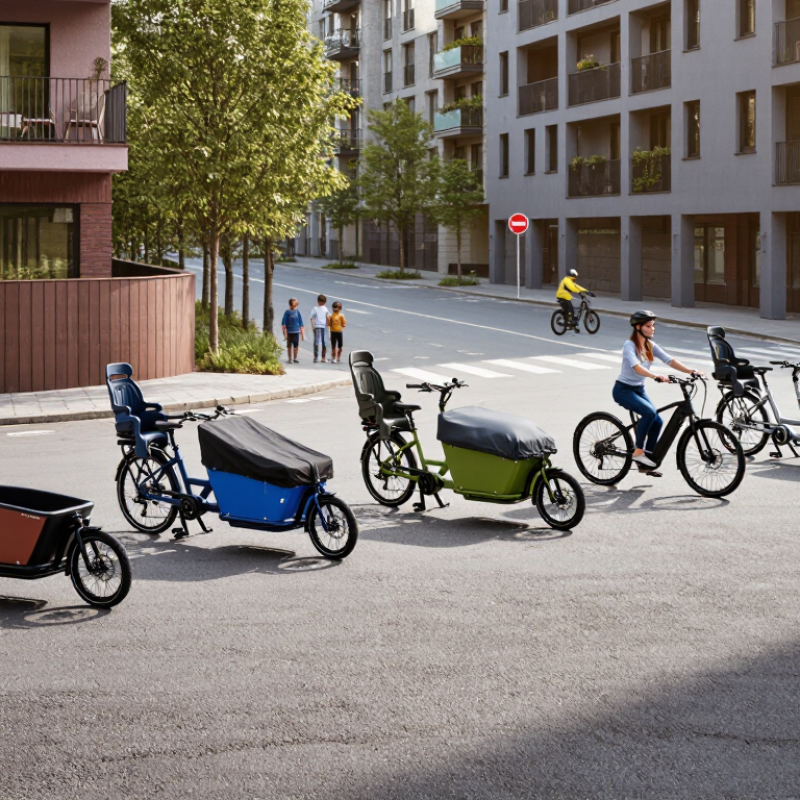
Electric cargo bikes serve very different transport needs. Longtail models carry children or panniers behind the rider, while front-loading bikes place a box between the handlebars and front wheel. Compact cargo bikes suit narrow storage spaces and shorter commutes. Space matters.

For heavier loads, a sturdy utility bike with a reinforced frame and strong brakes can make grocery runs or tool deliveries more manageable. Three-wheel cargo bikes offer a broad, stable platform at low speeds, though they may feel less nimble around tight corners. Folding cargo bikes are easier to store in small homes, but their load capacity and ride feel can vary. Test it loaded.

Before choosing, measure doorways, storage areas, and the route’s tightest turns. Check the published payload limit, including the rider, cargo, and any accessories. A child seat, rain cover, or large box can change how a bike handles. Motor assistance helps on hills, but it does not replace suitable gearing or reliable brakes. On a test ride, try a typical load and notice how the bike starts, stops, and balances. One trade-off is hard to avoid: more carrying space usually means a larger bike.

How to Evaluate Range, Load Capacity, Safety, and Comfort

Range claims need context. A battery may cover a long test ride, then lose distance in cold weather, on hills, or under heavy loads. Compare tested range with your daily route, including the return trip and a reserve for detours. Numbers can mislead. ECF’s Cyclelogistics research estimated that about 51% of urban motorized goods trips could be shifted to cargo bikes. That makes short, repeatable trips a useful benchmark, not a promise of universal suitability.

Check payload as a system: rider, passengers, cargo, and accessories all add weight. Look for clearly stated load limits and test steering with a realistic load, such as a child seat or grocery crates. The International Transport Forum’s 2020 Safe Micromobility report stresses vehicle design and safe infrastructure. For a practical safety check, inspect brake feel, lighting, tire grip, and stability during slow turns. Test it loaded. A bike that feels steady empty may handle differently with weight high or unevenly distributed.

Comfort affects whether the bike gets used. Ride over rough pavement and up a familiar hill; note reach to the handlebars, saddle support, and how easily you mount and park. A low step-through frame helps, but it does not suit every rider or cargo setup. Ask about replacement batteries, service access, and spare parts in your region. I would not trust a single showroom ride. It can hide the awkward details.

7 Best Electric Cargo Bikes for Global Buyers? — How to Evaluate Range, Load Capacity, Safety, and Comfort

Estimated range from seven illustrative battery-capacity setups. These are not specifications for specific bikes.

How to read this: Range estimates are calculated as battery capacity ÷ 15 Wh/km. For example, a 600 Wh battery gives an estimated 40 km. Actual range depends on cargo weight, terrain, assist level, temperature, and riding conditions. Check each bike’s rated payload, braking system, lights, and riding position separately.

What Global Buyers Should Know About Shipping, Laws, and Support

Shipping an electric cargo bike takes more than booking a large carton. Ask for the packed dimensions, gross weight, battery capacity in watt-hours, and the UN 38.3 test summary before requesting freight quotes.

Lithium-battery paperwork and packing rules differ by transport mode and destination, so confirm requirements with the carrier. Small detail, big delay. The World Economic Forum’s 2020 report, The Future of the Last-Mile Ecosystem, projected that last-mile delivery emissions in 100 cities could rise 60% by 2030 without intervention. That makes efficient urban transport relevant, but it does not guarantee every cargo bike suits every route.

Check local rules before purchase: permitted motor output and assisted speed, vehicle classification, lighting, helmet requirements, and cargo limits can vary. Request applicable safety test documentation, such as records against the EN 17860 series for transport bikes, where relevant.

Then check who handles warranty claims in your country. Ask whether the seller can supply brake pads, tires, display units, and battery replacements, and how long common parts take to arrive. A bike may look sturdy in a product photo; a loaded test ride on a curb or steep driveway reveals more. One honest caveat: a low purchase price can become costly if diagnostics or replacement parts are unavailable locally.

crossmenu linkedin facebook pinterest youtube rss twitter instagram facebook-blank rss-blank linkedin-blank pinterest youtube twitter instagram