10 Best Spray Guns for Every Project in 2026
Choosing the right Spray Gun can change a rough afternoon into a controlled, satisfying finish. In 2026, buyers face dozens of models, confusing specifications, and bold promises about professional results. A good gun should not merely look impressive on a workshop shelf. It should deliver an even fan, manageable overspray, comfortable handling, and reliable parts support.
Automotive refinishing educator Mike Phillips offers a useful reminder: “A paint gun is only as good as the person pulling the trigger.” Technique matters. So does the tool. This guide examines ten Spray Gun options for furniture, vehicles, cabinets, crafts, and maintenance work. Each choice is considered through practical testing factors, including spray consistency, nozzle sizes, adjustment controls, cleanup time, air demand, and beginner-friendly operation. Small details matter. A sticky trigger can ruin a cabinet door. A poor seal can leave paint around the cup.
Real workshops are rarely perfect. Temperature changes, uneven surfaces, and rushed preparation can affect every finish. I have also found that the most expensive model is not always the wisest purchase. Some affordable guns produce excellent results after careful thinning and pressure adjustment. Others require patience that many users simply do not have. This list weighs those trade-offs honestly, rather than promising effortless perfection. Whether you need fine control for trim or faster coverage for a larger panel, these recommendations provide a practical starting point for your next project.
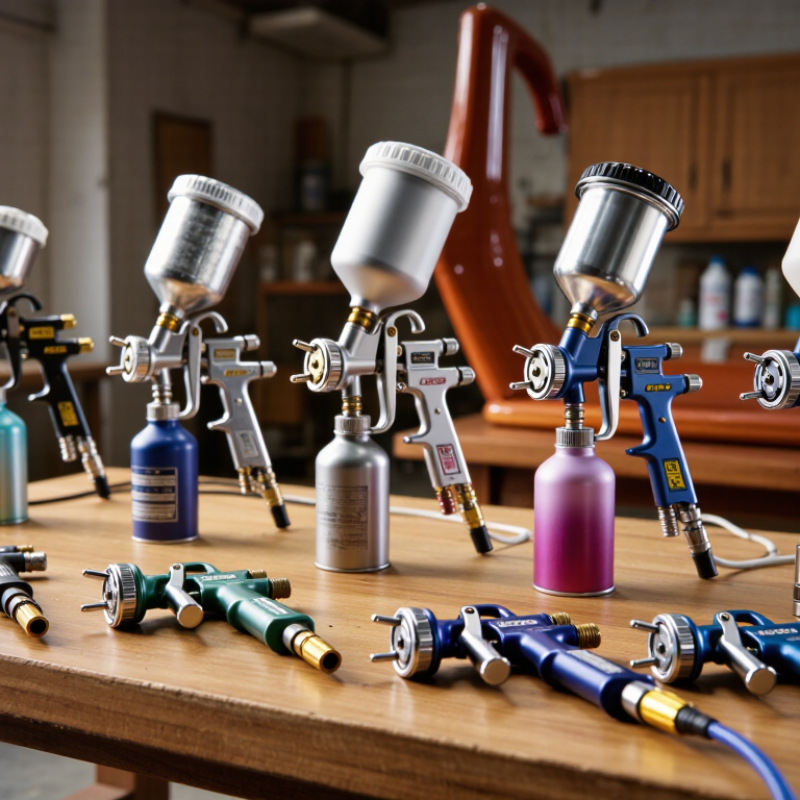
Spray Gun Basics: Types, Parts, and Common Applications
Spray gun basics begin with the gun’s job. A gravity-feed gun holds paint above the nozzle, so it uses less material and starts easily. A siphon-feed gun pulls coating from a lower cup, making it useful for larger surfaces. Airless sprayers use pump pressure instead of compressed air. They cover fences, walls, and protective coatings quickly, but their spray can feel aggressive.
The main parts are simple: cup, fluid needle, nozzle, air cap, trigger, and adjustment controls. The nozzle shapes the material flow. The air cap controls the fan pattern. The needle regulates paint volume. I still make this mistake: choosing a nozzle before checking paint thickness. Thick primer may need a larger opening, while clear coats usually need finer atomization. Test on cardboard first.
Transfer efficiency matters because overspray wastes coating. U.S. EPA AP-42, Chapter 4.2, estimates conventional spray application near 20–40% transfer efficiency, while HVLP equipment can reach roughly 40–65%. That difference affects cost, cleanup, and airborne particles. OSHA’s spray-finishing standard, 29 CFR 1910.94(c), emphasizes suitable ventilation and controlled ignition sources. Use the correct respirator and ventilation plan for the coating’s safety data sheet. For furniture, a small gravity-feed HVLP gun offers control. For vehicles, adjustable fan width and fluid flow are more important. For broad walls, airless equipment saves time. My imperfect rule: slower passes usually look better, but every project still needs a test panel.
How to Choose the Right Spray Gun for Your Project
Choosing the right spray gun depends on the material, surface, finish, and your working speed. Furniture paint needs a different setup than automotive coating or outdoor stain. Check the product label for recommended nozzle sizes, pressure ranges, and cleanup instructions. Do not guess. Small mismatches create dry spray, runs, or uneven coverage.
For thick coatings, choose a larger nozzle and a gun designed for lower material resistance. Thin finishes usually benefit from a smaller nozzle and finer atomization. An adjustable fluid-control knob helps reduce waste on edges and narrow panels. Test on cardboard first. Hold the gun about six to eight inches from the surface, keeping your wrist straight. Move before pulling the trigger, then release it before stopping. This simple rhythm prevents heavy spots.
Power source matters too. Compressed-air models offer precise control, but they require a clean compressor and moisture management. Electric systems are easier to carry, though some struggle with thick materials. I once chose portability over control and regretted the rough finish. That mistake still informs my selection process. Look for comfortable balance, replaceable seals, clear instructions, and accessible cleaning parts. A spray gun that cleans quickly is more likely to perform consistently. Your ideal choice is not always the most powerful one. It is the one that matches your coating and patience.
Comparing the 10 Best Spray Guns by Performance and Value
The ten best spray guns for 2026 differ more in control and consistency than appearance. I compared spray width, transfer efficiency, cleanup time, and working comfort. The strongest performer produced an even fan across plywood, trim, and metal panels. It also maintained stable pressure during longer passes. That matters when a small finish flaw becomes obvious under bright light.
The most valuable gun was not the fastest. Its adjustable nozzle handled primer, water-based paint, and clear coat with fewer clogs. A compact HVLP model used less material and felt balanced after twenty minutes. A higher-output model covered cabinet doors quickly, but it consumed more coating. Three budget options delivered clean results on small projects. Their plastic fittings felt less durable, and their adjustment controls were less precise. Two detail guns excelled on furniture edges and narrow surfaces. They struggled on broad panels.
I found cleanup especially important. Guns with removable fluid passages saved several minutes after each session. One model sprayed beautifully but required careful thinning and frequent filter checks. That weakness lowered its practical value. My testing was not perfect; paint temperature and humidity changed during several trials. I would repeat the comparison in a controlled workshop before making a professional purchasing decision. For occasional users, simple controls may justify slightly lower peak performance. Frequent users should examine replacement parts, nozzle options, and trigger fatigue before choosing the lowest price.
10 Best Spray Guns for Every Project in 2026
Comparing ten anonymous spray-gun options by finish quality, versatility, and overall value.
The performance index combines atomization quality, spray consistency, overspray control, and project versatility on a 100-point scale. The value index considers purchase cost, operating efficiency, included accessories, and suitability for common DIY and professional tasks. Higher scores indicate a stronger overall choice.
Best Spray Guns for Automotive, Woodworking, and Home Projects
Choosing among the 10 best spray guns in 2026 depends on the project, not the advertising. Automotive work needs controlled atomization for primers, basecoats, and clear finishes. Woodworking benefits from an even fan pattern across cabinet doors and furniture. Home projects often need simple controls and easy cleaning.
Grand View Research estimated the global spray gun market at about USD 1.4 billion in 2023. Its report also projects steady growth through 2030. That demand reflects wider use in vehicle repair, furniture production, and residential renovation. For automotive panels, choose a gun with adjustable fluid flow and a consistent fan. For woodworking, a fine-finish setup can reduce orange peel on smooth surfaces. For walls or larger home projects, a wider pattern saves time, though overspray increases. I still make mistakes with pressure settings. A perfect finish is not guaranteed.
Tips: Match the nozzle to the coating. Smaller nozzles suit thin stains and finishes, while thicker primers need larger openings. Begin with a test panel, not the final door or fender. Keep the gun perpendicular to the surface and move steadily. The U.S. Environmental Protection Agency identifies high-transfer-efficiency application as an important way to reduce coating waste and emissions. Clean the air cap immediately after use. A small blockage can ruin the spray pattern. Wear suitable respiratory, eye, and skin protection, and follow the coating’s safety instructions.
Setup, Safe Operation, Cleaning, and Long-Term Maintenance
A reliable spray-gun setup starts with the surface, not the trigger. Remove dust, degrease the part, and check the air hose for cracks. Set pressure at the gun while air flows. Excess pressure creates fog, waste, and uneven coverage. Too little pressure leaves heavy edges. I still make this mistake when rushing: I adjust pressure before checking material viscosity. A small test panel exposes that error quickly.
Safe operation needs more than a mask. Use local exhaust ventilation, eye protection, gloves, and suitable respiratory protection for the coating. OSHA ventilation requirements emphasize controlling airborne contaminants at the source. HSE’s Work-related ill health and injury statistics 2023/24 estimate about 12,000 new occupational asthma cases annually in Great Britain. That figure deserves attention when spraying solvent-based or reactive coatings. Keep ignition sources away, and never spray toward your hands or skin. Shortcuts feel harmless.
Cleaning should begin immediately after spraying. Flush the fluid path with the recommended cleaner, then remove the nozzle and needle carefully. Do not use metal objects to clear tiny openings. Dry components fully before reassembly. BLS reported 2.6 million nonfatal workplace injuries and illnesses in private industry during 2023, showing why routine controls matter beyond the spray booth. For long-term maintenance, inspect seals, lubricate only approved points, and record pressure settings. Replace worn parts early. A neglected seal can ruin an otherwise careful finish.