Get A Free Quote

How to Choose the Right Container Storage Solution?

Choosing the right Container Storage solution is a practical decision, not a simple price comparison. UNCTAD’s Review of Maritime Transport 2024 confirms that more than 80% of global merchandise trade moves by sea. That scale creates constant pressure on ports, warehouses, and inland storage yards. A suitable solution must protect goods while keeping daily handling predictable.

Look closely at the site. A standard 20-foot container offers roughly 33 cubic metres of internal space, but pallets, doors, and loading gaps reduce usable capacity. Check ground strength, drainage, turning space, lighting, and vehicle access. The World Bank and S&P Global Market Intelligence’s Container Port Performance Index 2023 assessed 405 ports using vessel time in port. Its findings show why delays matter: storage is connected to transport performance, not isolated from it. A poorly positioned container may create extra lifts, longer queues, and hidden labour costs.

Security also deserves physical attention. Consider lockboxes, CCTV coverage, weather seals, inspection routines, and clear inventory records. Refrigerated containers require reliable power, temperature monitoring, and emergency procedures. Dry cargo may need ventilation or humidity control instead. The right choice depends on cargo value, storage duration, turnover, and local conditions. There is no perfect formula. I would still question any recommendation based only on container size or monthly rent. Those figures can look attractive until demurrage, relocation, maintenance, and damaged goods appear. A reliable selection process combines operational experience, verified specifications, supplier references, and a written total-cost comparison.
How to Choose the Right Container Storage Solution?

Assess Cargo Flow Using UNCTAD’s 80% Seaborne-Trade Benchmark

How to Choose the Right Container Storage Solution?

Assess Cargo Flow Using UNCTAD’s 80% Seaborne-Trade Benchmark

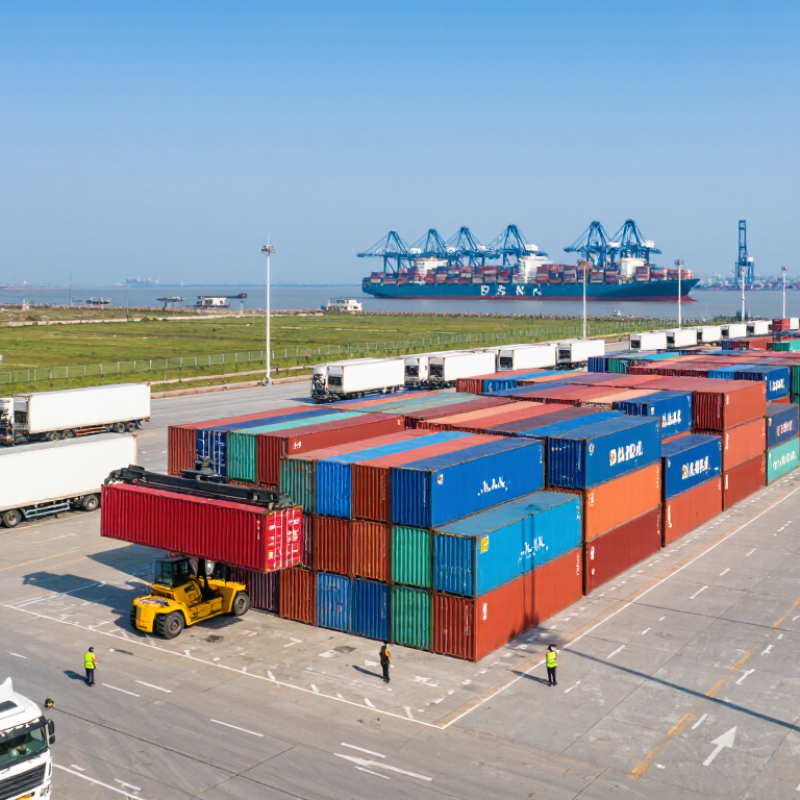
UNCTAD reports that more than 80% of global merchandise trade by volume moves by sea. This benchmark highlights why container storage planning must begin with cargo flow, not available floor space. However, it is not a universal storage formula. Bulk cargo, air freight, and regional trucking can produce very different requirements.

Map the full journey of each container. Record vessel arrivals, gate movements, average dwell time, and peak-day volume. A practical review might show 120 containers arriving within six hours, while only 70 leave that day. That gap creates pressure on yard capacity. A 40-foot container may also need different handling space than a 20-foot unit. Refrigerated cargo requires power access, inspections, and reliable monitoring.

Choose storage capacity from measured patterns. Keep a buffer for weather delays, port congestion, and uneven booking schedules. Yet excessive space can increase handling distance and operating costs. This is where planning often becomes imperfect. Historical averages may hide sudden seasonal surges. The 80% seaborne-trade benchmark offers authority and context, but local data must guide the final decision.

Review the model regularly. Compare planned capacity with actual dwell time, damaged equipment, retrieval delays, and gate queues. A simple spreadsheet can reveal problems before a crowded yard does. Storage should support predictable movement, safe handling, and documented operating controls.
Match Container Types to ISO 668: 20-Foot and 40-Foot TEU Standards

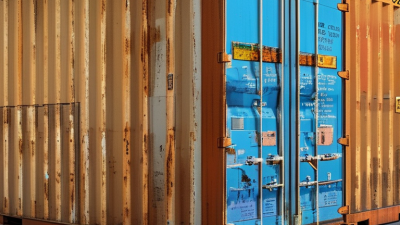
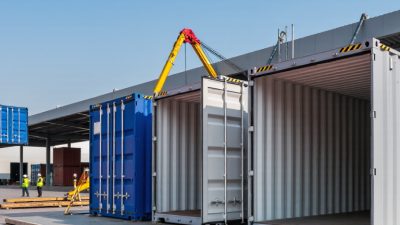
Choosing a container storage solution starts with the ISO 668 framework. A standard 20-foot container represents one TEU, while a standard 40-foot container represents two TEU. Their nominal external lengths are about 6.058 metres and 12.192 metres. Both commonly measure 2.438 metres wide and 2.591 metres high.

Measure twice.

These dimensions help planners estimate ground capacity, aisle space, and handling routes. However, a storage yard should not treat a 40-foot container as exactly two 20-foot units. Doors, corner castings, lifting equipment, and safety clearances affect the real layout. High-cube containers also require additional vertical clearance, even when their footprint remains similar. ISO 668 provides a reliable dimensional reference, but it does not replace a site survey.

For ground storage, mark separate slots for 20-foot and 40-foot units. A 20-foot position can improve flexibility near loading areas, while 40-foot positions may support higher-volume movements. Check pavement strength, drainage, turning radii, and reach-stacker access before finalizing the plan. One overlooked drain can disrupt an otherwise efficient row. The simple one-to-two TEU rule is useful, but incomplete. Actual container condition, mixed equipment, and future demand may expose weaknesses in the first design. Review clearances with measured equipment data, not assumptions.

Size Storage Capacity by Dwell Time, Peak Volume, and Utilization Rates

How to Choose the Right Container Storage Solution?

Storage capacity should reflect dwell time, peak volume, and utilization rates, not average activity alone. UNCTAD’s Review of Maritime Transport 2024 reported approximately 858 million TEUs moved through container ports in 2023. That scale shows why small planning errors can quickly become expensive. Measure daily inbound containers, average dwell days, and the highest seasonal volume.

A practical estimate is: required slots = peak daily volume × dwell time ÷ target utilization.

For example, 120 containers arriving daily with six-day dwell require 720 occupied slots. At 80% utilization, plan for about 900 slots. Keep spare space for inspections, transfers, weather delays, and uneven stacking.

Tips: Track dwell time by customer, container type, and week. Use a rolling 90-day dashboard, then test holiday and disruption scenarios. Industry capacity studies commonly warn that operating near full utilization reduces handling flexibility and increases rehandles. An 80–85% planning target is often safer than chasing maximum density. Still, the right rate depends on yard design, equipment, labor, and gate patterns. Not every facility needs the same buffer. A refrigerated container, for instance, may require dedicated power access rather than ordinary open storage.

Drewry’s Container Forecaster has repeatedly highlighted volatile trade flows and equipment imbalances as planning risks. Therefore, size for the peak that can realistically occur, not an extreme event with no probability. I would review the model monthly. Forecasts are useful, but actual dwell data usually exposes the uncomfortable gaps.

Compare Yard, Depot, and Warehouse Options Using Total-Cost Metrics

Choosing a container storage solution starts with total cost, not the advertised daily rate. A yard may offer flexible access and lower rent, but longer drayage can erase that advantage. A depot often combines storage, inspections, and basic handling in one location. A warehouse provides stronger protection, yet indoor space usually carries higher labor and equipment charges.

Build a cost model for each option. Include storage rent, gate fees, loading, unloading, transport, insurance, security, repairs, and administration. Measure the cost per container per day, then test different dwell times. A container stored for ten days may favor a depot. Longer dwell periods can make a yard more economical. Access matters too. Count every extra truck trip, waiting hour, chassis charge, and appointment fee.

Use real shipment records when possible. During one review, a team found that a low-rate yard created expensive empty moves across town. The warehouse looked costly, but reduced damage and faster picking balanced part of the difference. Small fees matter. My early models were too neat. They underestimated delays caused by peak traffic and weather. That weakness is worth admitting. Compare at least three scenarios: normal volume, seasonal congestion, and an urgent retrieval. Ask operators for invoices, service-level data, and damage records. A reliable decision should survive those less comfortable numbers.

How to Choose the Right Container Storage Solution? - Compare Yard, Depot, and Warehouse Options Using Total-Cost Metrics

Planning benchmarks in USD for a standard 40-foot dry container. Rates vary by location, season, access requirements, container condition, labor market, and contract terms. Use supplier quotations before making a final decision.
Evaluation Dimension Open Container Yard Container Depot Warehouse / Covered Storage Total-Cost Interpretation
Best-fit operating profile Empty or loaded containers requiring economical outdoor storage and regular truck access. Containers needing storage plus inspection, repair, cleaning, interchange, or repositioning services. High-value cargo, sensitive goods, transloading, consolidation, or cargo requiring protection from weather. Choose according to cargo risk and required services, not storage price alone.
Typical storage charge $3–$8 per container per day $6–$15 per container per day $0.75–$1.50 per square foot per month; approximately $14–$29 per container-equivalent day after allocating floor space and aisles. Yards generally have the lowest basic storage cost.
Handling and lift charges $25–$60 per lift or truck move. $40–$90 per lift, often including inspection or interchange handling. $75–$180 per unload/load cycle, plus labor for palletizing, counting, or staging. Warehouse handling can exceed the storage charge when cargo is frequently moved.
Typical local drayage allowance $100–$250 per one-way move, depending on distance, appointment requirements, and chassis availability. $75–$180 per one-way move when the depot is integrated with a transport network. $125–$300 per one-way move because covered facilities may be farther from terminals or require scheduled delivery windows. Distance and congestion can materially change the preferred option.
Security and weather protection Perimeter fencing, lighting, cameras, and outdoor exposure; cargo remains vulnerable to weather. Controlled gate access, inspection records, and improved process control; storage is commonly outdoors. Highest protection against rain, snow, dust, and unauthorized access, subject to facility controls. Warehouse storage can reduce weather-related claims and packaging costs for sensitive cargo.
Inspection, repair, and cleaning Usually limited or outsourced; common repair allowance: $75–$250 per repair event. Core service capability; inspection commonly costs $15–$45 per container, excluding repairs. Usually not included; specialist services may require additional transport and handling. Depots are usually the most efficient option when container condition management is required.
Average access and release speed Same-day access is often possible with advance notice; congestion may affect truck turnaround. Same-day or next-business-day release is common when documentation is complete. Usually appointment-based; release may take one to two business days when cargo must be picked, counted, or repacked. Faster access reduces detention, truck waiting, and production interruption costs.
Inventory visibility Basic gate records; real-time status depends on the operator. Usually stronger interchange, inspection, and container-status records. Best suited to SKU-level inventory, lot control, scanning, and cycle counting. Warehouse visibility is valuable when inventory accuracy has a high financial impact.
Space utilization High-density stacking is possible, but retrieval may require rehandles. Stacking and yard planning are generally optimized for container flow and equipment access. Requires floor area, aisles, fire lanes, loading space, and possible pallet positions; lower container density. A low storage rate can be misleading if inefficient space utilization increases total occupied area.
Additional cost risks Rehandles, weather damage, long truck queues, chassis shortages, and access restrictions. Repair overruns, inspection failures, service minimums, and depot congestion. Labor, palletization, security surcharges, minimum monthly rent, and additional drayage. Include expected accessorials and risk costs in the comparison.
Illustrative 30-day storage cost $90–$240 per container, before transport and handling. $180–$450 per container, before transport and handling. $432–$864 per container-equivalent, based on approximately 576 square feet of allocated space. For a full 30-day dwell period, outdoor options are normally cheaper on direct storage cost.
Illustrative total-cost range for one 30-day cycle $340–$1,090
Storage, two local moves, and two lifts included.
$555–$1,170
Storage, two local moves, two lifts, and one inspection included.
$957–$1,944
Allocated storage, two local moves, two handling cycles, and basic labor included.
Use the range as a screening tool; apply actual lane rates, dwell time, and service requirements.
Primary total-cost advantage Lowest direct storage cost and good flexibility for standard containers. Balanced cost when inspection, repair, cleaning, and interchange services are needed. Lowest exposure to weather and cargo-handling risk for sensitive or high-value goods. There is no universal lowest-cost solution; the lowest total cost depends on the operating profile.
Recommended selection rule Use when dwell time is predictable, cargo is weather-tolerant, and cost per day is the priority. Use when container condition, compliance, repair, or interchange reliability is more important than the lowest storage rate. Use when cargo protection, inventory accuracy, security, or value preservation justifies higher handling and space costs. Compare storage + handling + drayage + inventory risk + expected accessorials + service-level impact.

Verify CSC, ISO 1496, and IICL Compliance Before Final Selection

How to Choose the Right Container Storage Solution?

Container storage decisions should begin with compliance, not paint, price, or appearance. UNCTAD’s Review of Maritime Transport 2023 reports that more than 80% of global trade by volume moves by sea. Stored containers still face lifting, stacking, wind, moisture, and repeated handling risks.

A valid CSC safety approval plate confirms that the unit has passed required structural examinations. Under the CSC Convention, periodic inspections generally occur at intervals not exceeding 30 months. Check the examination date carefully.

ISO 1496 verifies essential freight-container requirements, including dimensions, strength, and testing performance. Confirm the container’s type, payload, corner fittings, and stacking capacity against your site equipment.

IICL inspection and repair guidance adds practical criteria for floors, doors, roofs, frames, and corrosion. Look closely at corner posts and cross members.

Surface rust is not automatically structural damage, but deep pitting deserves qualified assessment. Photographs alone can mislead.

Ask for inspection records, repair history, and the original safety plate before selection. Match the container to the intended storage period and loading pattern. A unit may look serviceable yet fail under uneven stacking. That mistake is expensive.

In practice, teams sometimes overtrust a clean exterior and undercheck the underside. An independent inspector can verify measurements, markings, and defects against current requirements.

Keep the report with the asset record. Standards evolve, and older paperwork may not prove present condition.

crossmenu linkedin facebook pinterest youtube rss twitter instagram facebook-blank rss-blank linkedin-blank pinterest youtube twitter instagram