What Are the Top Isolation Transformer Suppliers in China?
Choosing among the top Isolation Transformer suppliers in China requires more than comparing prices or polished factory websites. A dependable supplier must demonstrate engineering experience, consistent production, transparent testing, and practical after-sales support. The strongest candidates usually provide complete technical drawings, insulation-system details, temperature-rise data, and documented routine-test records.
Power-quality specialist Dr. Mark McGranaghan offers a useful principle: “Power quality is the set of electrical boundaries that allow equipment to function in its intended manner.” This idea matters when evaluating Chinese manufacturers. An Isolation Transformer should not merely separate circuits. It should reduce conducted noise, withstand expected voltage stress, and support stable operation in hospitals, data centers, industrial controls, or renewable-energy systems.
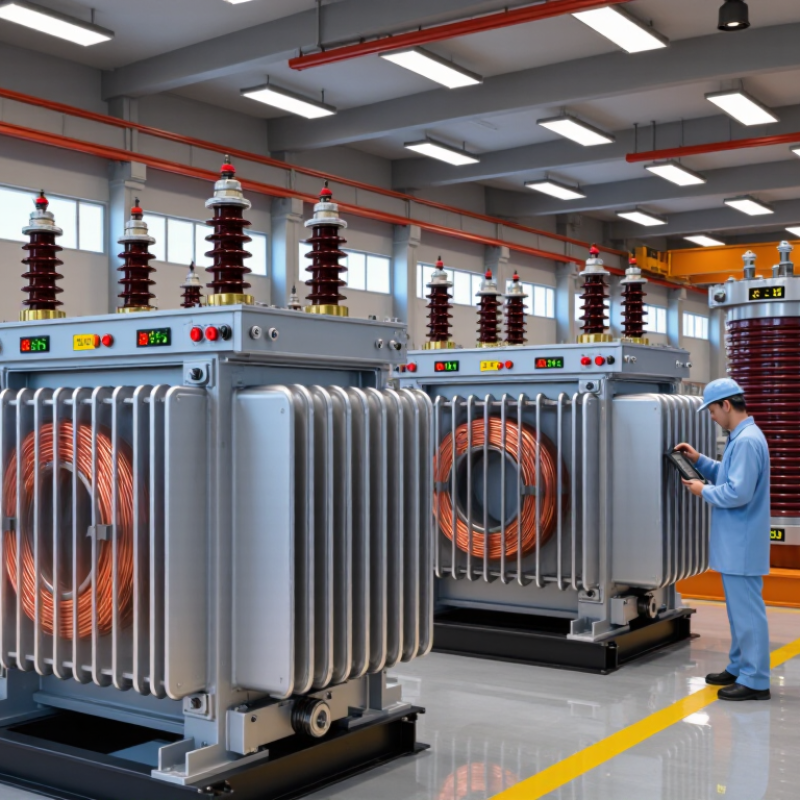
Look closely at the factory floor. Are copper windings protected from moisture? Are core laminations stacked evenly? Does the supplier perform hipot, insulation-resistance, ratio, and load tests before shipment? These details reveal more than a catalog image. ISO certification can support credibility, but it does not replace an independent audit or sample inspection.
There is no universal best supplier. That is the uncomfortable part. A low-cost unit may become expensive after delayed delivery, poor documentation, or difficult warranty communication. Some manufacturers also publish impressive efficiency figures without explaining test conditions. Buyers should request verifiable reports, reference projects, production capacity, and clear acceptance criteria.
This guide examines leading Chinese suppliers through those practical lenses. It considers product quality, customization, compliance, delivery reliability, and technical communication. The ranking may still require personal verification. That is worth doing.
What Is an Isolation Transformer and Why Is It Used?
What Are the Top Isolation Transformer Suppliers in China?
An isolation transformer separates the input and output circuits through magnetic coupling. In many designs, the primary and secondary windings have a 1:1 ratio. This arrangement blocks direct galvanic connection while transferring power safely. It can reduce common-mode noise, ground-loop interference, and transient disturbances in sensitive equipment.
The U.S. Department of Energy reported that distribution transformer losses consume about 61 billion kilowatt-hours annually in the United States. This figure shows why efficiency, heat control, and correct sizing matter. An isolation transformer is not automatically a complete safety solution. Proper grounding, fuses, enclosure protection, and overload testing remain essential. The explanation sounds simple. Field conditions are not.
When comparing Chinese suppliers, buyers should request test records based on IEC 61558 requirements. Check dielectric withstand voltage, insulation resistance, temperature rise, no-load loss, and load efficiency. A reliable factory should provide winding diagrams, material traceability, routine test results, and clear production tolerances. The International Energy Agency also identifies grid efficiency and equipment losses as important parts of broader power-system improvement. Suppliers with in-house testing usually offer stronger technical control, although this should be verified through an audit. Product certificates alone can be insufficient. Ask how the transformer performs after continuous operation, not only how it looks on paper.
Which Factors Define a Reliable Chinese Isolation Transformer Supplier?
A reliable Chinese isolation transformer supplier should prove more than a competitive price. In practical sourcing, technical transparency is the clearest starting point. The supplier should provide rated power, input and output voltage, frequency, insulation class, efficiency, and temperature-rise data. Clear drawings matter. Vague specifications create expensive problems later.
Factory experience also deserves close attention. Ask whether the supplier designs, winds, assembles, and tests transformers in-house. A dependable manufacturer can show inspection records, calibrated testing equipment, and traceable component batches.
Essential tests may include insulation resistance, withstand voltage, turns ratio, no-load current, and temperature rise. Certification documents should match the actual model, not a similar product.
A site audit can reveal practical details, such as organized copper wire storage and labeled production stations.
Responsive communication is another strong reliability signal. Engineers should answer technical questions directly and explain limitations honestly. They should also confirm lead times, packaging standards, sample procedures, warranty terms, and spare-part support.
A supplier that accepts small trial orders may reduce purchasing risk. Still, no supplier gets every detail right. I would recheck drawings, connector positions, and local electrical requirements before approval.
A polished website is not proof. Consistent test results and accountable service are stronger evidence.
What Are the Top Isolation Transformer Suppliers in China?
What are the top isolation transformer suppliers in China? The strongest candidates are established manufacturers with tested production lines, not merely trading companies. They commonly offer single-phase and three-phase units for hospitals, factories, data rooms, and laboratory equipment. A reliable supplier should show rated power, insulation class, efficiency, temperature rise, and short-circuit performance in clear technical documents. Factory experience matters.
During supplier evaluation, request recent test reports, sample units, and a video inspection of winding and assembly areas. Check conductor materials, varnish treatment, shielding structure, and enclosure protection. Quality teams should verify dielectric strength and no-load current before approval. Certificates help, but they are not enough. Some documents look polished while production consistency remains uncertain.
Practical buyers should compare response time, customization control, spare-part support, and export packaging. Ask how each supplier handles voltage tolerance, noise, heat, and installation conditions. A dependable manufacturer explains limits honestly and records corrective actions after failures. Small details, such as terminal labels and shock-resistant packing, often reveal factory discipline. No supplier is perfect; an overlooked inspection step can still become an expensive field problem.
How Can Buyers Choose the Right Isolation Transformer Supplier?
Choosing among China’s isolation transformer suppliers requires more than comparing quotations. The IEA’s Electricity 2024 report forecasts global electricity demand to grow by about 3.4% annually from 2024 to 2026. That growth increases demand for safer power conversion in hospitals, laboratories, factories, and data facilities. Buyers should therefore inspect a supplier’s experience in their specific application, not just its production volume.
Ask for test records covering insulation resistance, dielectric strength, temperature rise, noise, and no-load losses. Confirm whether the design follows relevant requirements, such as IEC 61558-2-4 or applicable national standards. The supplier should explain core material, winding layout, shielding, enclosure protection, and cooling method in clear technical language. Request a sample report with serial numbers and calibrated instruments. Vague documents are a warning sign.
Cost still matters. MarketsandMarkets’ Transformer Market report projects the global transformer market to reach about USD 82 billion by 2029, showing strong industrial demand. Yet a low initial price may hide weak copper content, limited testing, or expensive maintenance. Compare five-year ownership costs, including efficiency losses, spare parts, delivery, and warranty response. I would also audit the factory, review two recent export projects, and speak with end users. This process is not flawless. Supplier websites can look convincing, while production consistency remains uncertain. A pilot order with acceptance testing is often wiser than a large first purchase.