Top 10 Position Sensors You Need to Know About?
The demand for Position Sensors continues to rise in various industries. According to a recent report by MarketsandMarkets, the global position sensor market is projected to grow from $3.29 billion in 2021 to $4.69 billion by 2026, at a CAGR of 7.4%. This growth highlights the critical role position sensors play in automation and technology.
Position sensors are essential for applications ranging from robotics to automotive systems. They help in determining the exact position of an object, ensuring precision and efficiency in operations. As industries strive for greater automation and smarter systems, the need for reliable position sensors becomes more evident.
Despite technological advancements, challenges remain. Not all position sensors offer the same reliability under varying environmental conditions. Some sensors may fail to provide accurate readings when subjected to extreme temperatures or electromagnetic interference. Evaluating these aspects is crucial for industries that depend on accuracy and consistency. Understanding the strengths and weaknesses of various position sensors is key to making informed decisions.
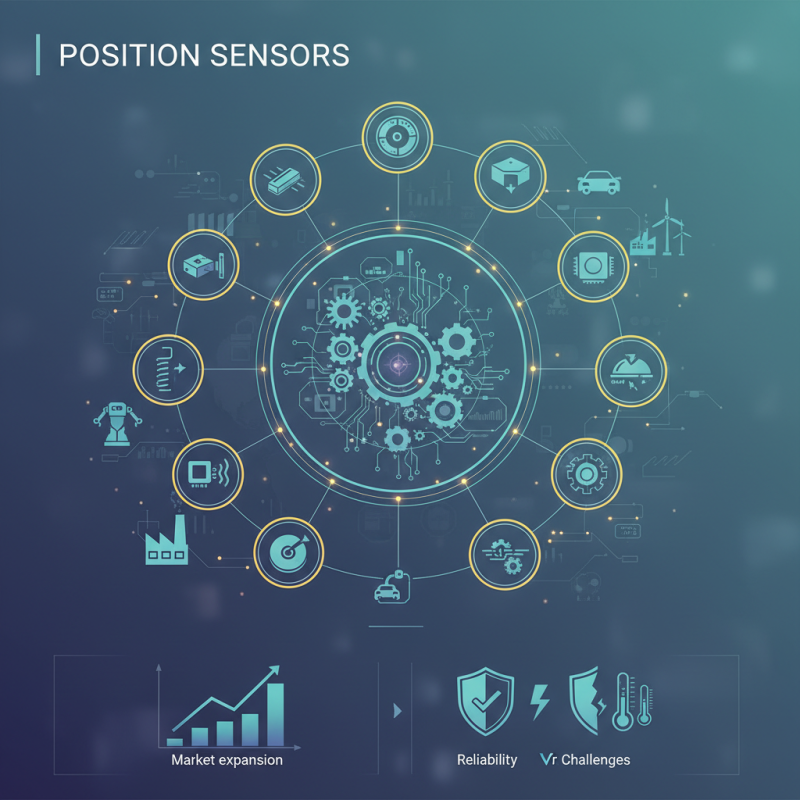
Overview of Position Sensors: Definition and Importance
Position sensors are essential tools in modern technology. They detect the location of an object in space. These sensors translate movements into measurable signals. This process plays a critical role in various applications, from robotics to automotive systems. Understanding how position sensors work can enhance control systems or automated machinery.
The importance of position sensors cannot be overstated. They contribute to precision in industrial automation. Accurate measurements lead to efficient production. In robotics, knowing the position of a robot arm is crucial. It allows for smooth motion and reliable task execution. However, errors can occur if sensors are miscalibrated or malfunctioning. Regular maintenance and checks are vital to prevent such issues.
Additionally, these sensors enable innovations in smart homes and wearable technology. Devices can track user movements seamlessly. But the complexity of integration can pose challenges. Developers must consider compatibility and performance. Achieving a balance between functionality and simplicity is key in sensor design.
Types of Position Sensors: An In-Depth Comparison
When exploring position sensors, understanding their types is vital. There are several key categories, including linear and rotary sensors. Linear sensors measure the position along a straight line. They are commonly used in applications like conveyors. On the other hand, rotary sensors track angular positions. They are ideal for motors or robotics. Each type serves distinct purposes.
Tips: Consider the environment. Some sensors work better in extreme conditions. Temperature, humidity, and dust can affect performance. Always evaluate your specific application requirements. It helps to avoid costly mistakes.
Another category is contact vs. non-contact sensors. Contact sensors often provide direct measurement but may wear down over time. Non-contact sensors, however, can be more durable. They use magnetic or optical methods, which can increase lifespan. Reflect on what your project needs. Assess the trade-offs carefully.
Top 10 Position Sensors: Features and Applications
Position sensors play a crucial role in various applications. They provide accurate information about an object's position or movement. These sensors are vital in industries such as automotive, robotics, and aerospace. According to a recent market report, the global position sensor market is expected to reach $6 billion by 2025, reflecting a compound annual growth rate of 7%.
Different types of position sensors have unique features. Potentiometric sensors are simple and cost-effective, ideal for basic applications. On the other hand, optical sensors offer high precision but can be sensitive to environmental factors like dust and light interference. Inductive sensors are durable and work well in harsh conditions. However, they often require a certain amount of installation space that may not always be available.
Applications vary widely across sectors. In automotive fields, these sensors help in the performance of electronic throttle control. In industrial automation, they ensure precise positioning of machinery. Yet, many users often overlook maintenance of these sensors, leading to inaccurate readings. Regular checks and recalibrations can extend their lifespan and ensure reliability. Failure to address these issues may result in costly downtimes or safety hazards.
Selecting the Right Position Sensor for Your Needs
Position sensors play a vital role in various industries. When choosing the right sensor, understanding application requirements is critical. Different sensors, such as potentiometers and encoders, can be suited for specific tasks. According to a recent industry report, the global position sensor market is expected to reach $3.6 billion by 2025, highlighting the growing importance of accurate positional data.
Consider the environment where the sensor will be used. Factors like temperature, humidity, and mechanical stress can impact sensor performance. For example, displacements in high-vibration settings might require more robust sensors. Reports suggest that around 15% of sensor failures are due to environmental influences. This statistic emphasizes the need for meticulous selection based on environmental conditions.
Another aspect to reflect on is cost versus performance. Sometimes, opting for a cheaper option can lead to greater long-term expenses due to maintenance and replacements. It is crucial to balance reliability and budget. Custom sensors can incur higher upfront costs but may provide superior performance. A survey indicated that 45% of engineers have faced issues with sensor selection, pointing toward the necessity for better decision-making.
Future Trends in Position Sensor Technology and Innovation
The future of position sensor technology is fascinating yet complex. Emerging innovations focus on miniaturization and increased efficiency. Sensors are becoming smaller while maintaining precision. This change opens doors for new applications in robotics and automation. Tiny sensors can easily integrate into wearable devices. The demand for real-time tracking is pushing the technology forward.
Furthermore, advances in wireless technology are significant. Wireless sensors improve flexibility and reduce installation costs. Yet, challenges remain, such as battery life and data security. Handling sensitive data requires robust protocols. As wireless technology becomes pervasive, ensuring trustworthiness is crucial.
Moreover, artificial intelligence plays a growing role in position sensing. Algorithms can enhance data interpretation and accuracy. Yet, reliance on AI can create a trade-off concerning human oversight. It's essential to balance automation with human insights. The journey towards smarter position sensors is fraught with opportunities and challenges, shaping a new era of technological innovation.