Global operations depend on reliable data movement between local equipment, regional networks, and cloud platforms. An Ethernet Gateway provides this connection through a familiar wired interface. It can link sensors, controllers, meters, and machines with enterprise systems across different locations.
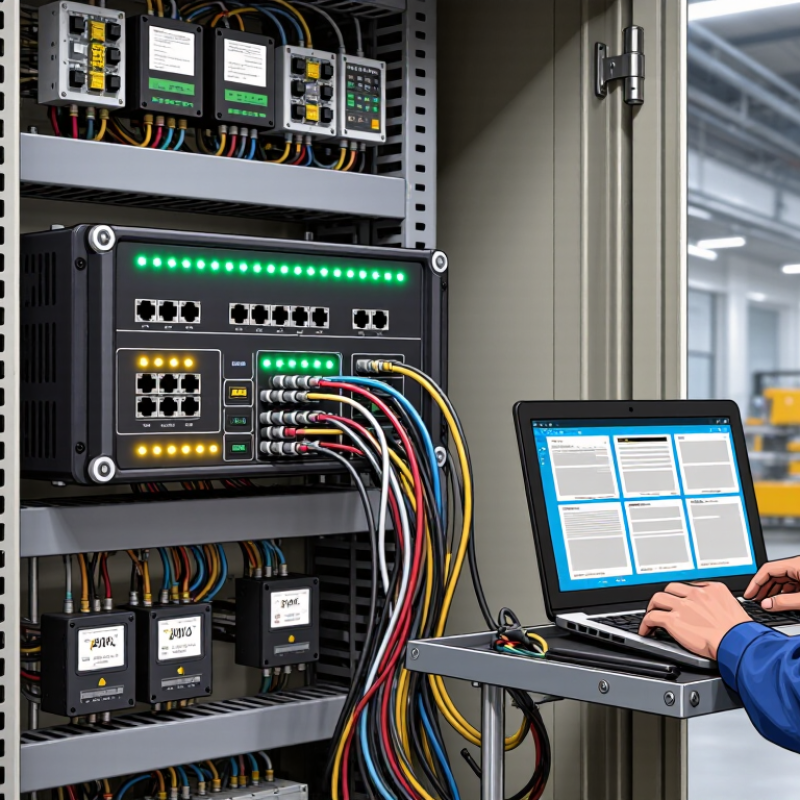
In practical deployments, wired Ethernet often offers stable bandwidth and predictable latency. A gateway can also translate protocols, manage device traffic, and support secure remote monitoring. Technicians may connect it inside a control cabinet, check status LEDs, and review diagnostic logs before production begins. These small details matter when a site operates hundreds of kilometers from the support team.
Professional selection requires more than comparing port numbers or purchase prices. Engineers should evaluate protocol compatibility, operating temperature, power requirements, network redundancy, and lifecycle support. Security features also deserve close attention, including access control, encrypted communication, firmware management, and segmented network design. Reliable vendors should provide clear documentation, tested updates, and responsive technical assistance.
Global networks are rarely identical.
Regional carriers, routing policies, and infrastructure quality can vary. An Ethernet Gateway may simplify these differences, but it cannot remove every operational risk. A carefully designed system still needs monitoring, backup communication paths, and regular security reviews. Some installations may reveal unexpected delays or configuration problems after deployment. That experience should guide improvement, not be hidden. When selected with evidence and tested in real conditions, an Ethernet Gateway can support dependable global connectivity while giving organizations clearer control over their distributed assets.
Why Choose an Ethernet Gateway for Global Connectivity?
An Ethernet gateway connects a local Ethernet network with wider IP networks, such as private backbones, cloud platforms, or public internet services. It acts as a controlled entry and exit point for data. Inside a warehouse, sensors may send packets through copper cables to the gateway. The gateway then routes those packets toward a remote operations center.
This device can manage routing, VLAN separation, firewall rules, and encrypted tunnels. These functions matter when offices operate across different countries and network conditions. A gateway may also convert local network requirements into compatible wide-area communication. Engineers often inspect IEEE 802.3 compatibility, addressing plans, latency, and failover behavior before deployment. Small errors matter. A wrong subnet can stop an entire production line.
Real-world installation requires more than plugging in cables. Teams should document ports, firmware versions, clock settings, and recovery procedures. Monitoring can reveal packet loss before users report a failure. Redundant links may keep services available during a carrier outage. However, redundancy is not magic. Poor testing can hide a single point of failure. In practice, the first configuration is rarely perfect, especially across distant sites with different equipment and technical habits. Engineers should review logs, test backup paths, and adjust access controls after observing real traffic. A reliable Ethernet gateway is therefore both a hardware platform and a carefully maintained network boundary.
| Dimension | Ethernet Gateway | Global Connectivity Value | Relevant Standard or Technical Basis |
|---|---|---|---|
| Definition | A network device that connects a local Ethernet network to one or more external networks and routes traffic between them. | Creates a controlled communication boundary between local equipment, data centers, cloud platforms, and wide-area networks. | Ethernet is defined by the IEEE 802.3 family; routing commonly uses Internet Protocol. |
| Primary Connectivity | Provides one or more Ethernet interfaces, commonly 10/100 Mbps, 10/100/1000 Mbps, or higher-speed Ethernet ports. | Supports stable wired access for offices, industrial sites, branch locations, and edge installations. | IEEE 802.3 Ethernet specifications define physical and data-link communication methods. |
| WAN Access Options | May connect Ethernet traffic to fiber, cellular, satellite, xDSL, fixed wireless, private WAN, or public Internet services, depending on the gateway design. | Allows the same local Ethernet environment to use different regional or international access methods. | The gateway operates above the physical access technology through IP-based networking. |
| Protocol Support | Typically supports IPv4, IPv6, DHCP, DNS, NAT, VLANs, routing, and firewall functions. | Improves interoperability across countries, carriers, cloud networks, and mixed-generation infrastructures. | IPv4 is specified by RFC 791; IPv6 is specified by RFC 8200; VLAN tagging is specified by IEEE 802.1Q. |
| Traffic Routing | Can route traffic between local subnets and external networks using static routes or dynamic routing protocols, depending on the model. | Enables segmented networks, regional routing policies, and controlled access to international resources. | Common routing functions include static routing, default routing, and, on advanced systems, OSPF or BGP. |
| Security Features | May include stateful firewall rules, access control lists, IPsec VPN, TLS-based services, secure administration, and network segmentation. | Protects data in transit and limits unauthorized access across public or shared networks. | IPsec is defined by IETF standards; TLS is used to secure application and management sessions. |
| Global Deployment | Can be deployed at headquarters, branch offices, factories, remote facilities, transport sites, and edge computing locations. | Provides a repeatable network architecture for geographically distributed operations. | Ethernet and IP are widely adopted networking technologies with broad equipment interoperability. |
| Reliability and Failover | Some gateways support dual WAN links, automatic failover, link monitoring, policy-based routing, and backup connectivity. | Reduces service interruption when a carrier, access link, or regional network becomes unavailable. | Failover behavior is implementation-dependent and should be verified against operational requirements. |
| Traffic Management | May provide Quality of Service, bandwidth controls, traffic prioritization, and application-aware policies. | Helps prioritize voice, video, business applications, industrial control traffic, and other latency-sensitive services. | QoS capabilities vary by implementation and often use packet classification and queuing methods. |
| Remote Management | May support web administration, command-line access, SNMP monitoring, centralized configuration, logging, and software updates. | Allows distributed equipment to be monitored and maintained without sending technicians to every location. | SNMP is commonly used for network monitoring; secure management should use encrypted access methods. |
| Data Integration | Can connect Ethernet-based sensors, controllers, servers, cameras, industrial devices, and edge applications to remote platforms. | Supports centralized analytics, monitoring, automation, and data exchange across multiple regions. | Application protocols such as HTTPS, MQTT, and OPC UA may be carried over IP networks. |
| Scalability | Can scale from a small branch network to larger segmented environments using additional ports, VLANs, routes, or centralized management. | Supports expansion into new offices, facilities, countries, and cloud services without redesigning every local device connection. | Actual scale depends on routing capacity, concurrent sessions, interface speed, and management architecture. |
| Best-Fit Use Cases | Branch networking, industrial IoT, smart infrastructure, remote monitoring, cloud access, secure site-to-site communication, and edge computing. | Combines local wired connectivity with flexible long-distance access and centralized control. | Suitability depends on required bandwidth, latency, security, environmental conditions, and available WAN services. |
| Key Selection Criteria | Evaluate Ethernet port speed, WAN options, IPv6 support, VPN capacity, firewall functions, failover, environmental rating, management tools, and lifecycle support. | Ensures the gateway matches regional connectivity conditions, security policies, application performance, and future expansion plans. | Performance and features are device-specific; technical specifications should be checked before deployment. |
Note: Ethernet gateway capabilities vary by implementation. Interface speeds, WAN technologies, routing protocols, security functions, and failover features should be confirmed in the applicable technical specification.