Why Choose Sealing Compound for Industrial Applications?
Industrial equipment rarely fails at the center of a component. Trouble often begins at a small joint, seam, or threaded connection. Choosing the right Sealing Compound helps control leaks, vibration, corrosion, and pressure loss before they become expensive failures. It can also reduce maintenance interruptions in pumps, hydraulic systems, compressors, tanks, and process lines.
Eric M. Petrie, author of the Handbook of Adhesives and Sealants, has emphasized, “A sealant must remain flexible enough to accommodate movement.” That principle remains practical on today’s factory floor. Metal surfaces expand under heat. Flanges shift slightly during operation. A suitable Sealing Compound fills microscopic gaps while maintaining contact through these changes. Its value depends on more than strong adhesion. Chemical resistance, curing behavior, temperature range, application method, and service pressure all require careful review.
The details matter.
An experienced maintenance team checks substrate cleanliness, joint clearance, curing time, and compatibility with oils or process fluids. Product data sheets provide useful limits, but real equipment conditions can be less predictable. A compound that performs well on a dry steel flange may fail on contaminated aluminum. This is where controlled testing becomes essential. Small trials, documented installation steps, and scheduled inspections improve reliability. Still, no compound solves poor joint design. That assumption is incomplete. Selecting Sealing Compound is therefore a technical decision, not a simple product purchase. It connects material science with field experience, measurable performance, and honest risk assessment.
What Is Sealing Compound?
Why Choose Sealing Compound for Industrial Applications?
What Is Sealing Compound?
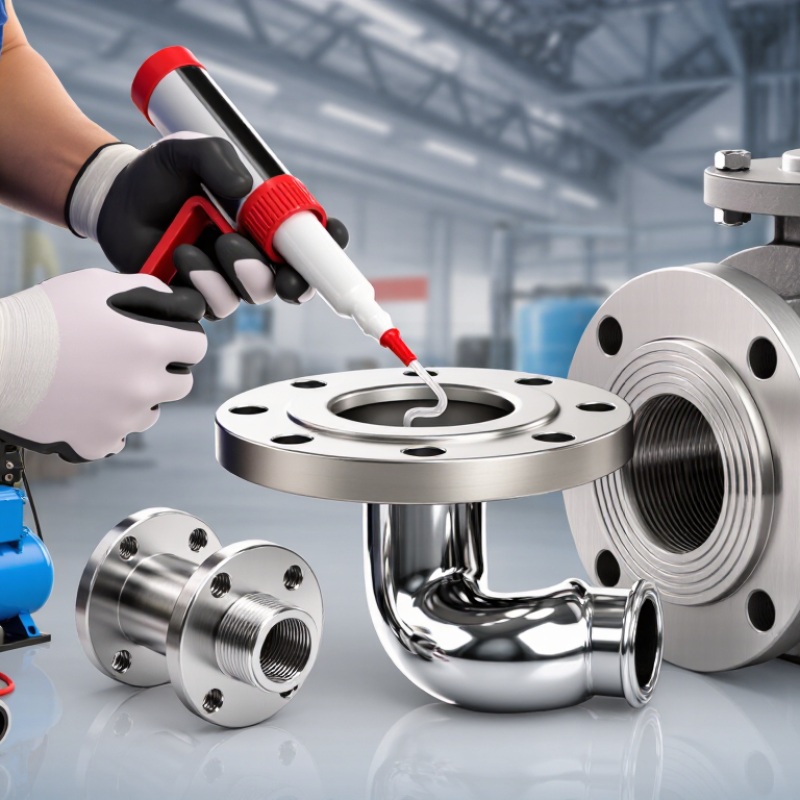
Sealing compound is a flowable or paste-like material that fills gaps between joined surfaces. It blocks liquid, gas, dust, and process chemicals from escaping. Unlike a rigid gasket, it can follow small movements caused by vibration, pressure, and temperature changes. Common types include anaerobic thread sealants, silicone compounds, polysulfides, and epoxy-based materials.
In practical maintenance work, the compound must match the joint. A technician checks thread size, surface condition, operating temperature, and chemical exposure before application. A thin, continuous bead usually performs better than excessive material. Cure time matters too. Rushing assembly can create an invisible leak path. That mistake is easy to make.
The U.S. Department of Energy reports that compressed-air leaks can waste 20% to 30% of compressor output. Proper sealing can reduce this loss, but compound alone is not a complete solution. Misaligned flanges, damaged threads, and poor tightening still require correction. Industry testing also relies on standards such as ASTM performance classifications and pressure-leak checks. These methods help verify adhesion, flexibility, and resistance under service conditions. Field inspection remains essential. Real equipment is rarely as clean as a laboratory sample.
How Sealing Compound Works in Industrial Systems
Sealing compound works by filling microscopic gaps between joined industrial surfaces. It spreads across flange faces, threads, or pipe connections before curing into a resilient barrier. Under pressure, the cured material limits gas and fluid migration through scratches, pits, and uneven machining marks. Small gaps matter. Field maintenance experience shows that surface preparation often determines performance more than application speed. Clean, dry surfaces improve adhesion, while oil, rust, or excess compound can create weak paths.
The U.S. Department of Energy reports that compressed-air leaks can waste 20–30% of compressor output in poorly maintained systems. A correctly selected sealant can reduce these losses, but it cannot repair damaged hardware. Temperature, pressure cycling, vibration, and chemical exposure must guide product selection. The NACE IMPACT study estimated global corrosion costs at about $2.5 trillion annually, equal to roughly 3.4% of global economic output. Sealing compounds help interrupt moisture and corrosive media, especially around threaded joints and enclosed interfaces. The chemistry matters. Anaerobic, silicone-based, and polymer formulations cure differently and tolerate different environments. Compatibility testing remains essential, particularly with oxygen service, aggressive solvents, or high-temperature fluids. In practice, no compound is universal. A rushed application may look successful during commissioning, then fail after thermal cycling. Engineers should verify cure time, gap-filling capability, torque requirements, and service limits against recognized test methods and the equipment manufacturer’s specifications.
Sealing compounds work by filling surface irregularities and creating a continuous barrier against pressure, fluids, gases, vibration, and corrosion. The chart shows representative continuous service-temperature ranges for common industrial sealing compound chemistries. Actual limits depend on formulation, joint design, pressure, chemical exposure, and curing conditions.
Which Industrial Problems Can Sealing Compound Solve?
Why Choose Sealing Compound for Industrial Applications?
Industrial equipment faces constant pressure, vibration, heat, moisture, and chemical exposure. These conditions can create leaks around threaded joints, flanges, pipe connections, and inspection covers. Sealing compound fills small gaps that rigid parts cannot close perfectly. It can also reduce contamination, pressure loss, and unplanned maintenance. In practice, a reliable seal protects more than one connection. It helps keep production stable.
Sealing compound can solve problems caused by thermal expansion and repeated movement. A pipe may expand during operation and contract after shutdown. A brittle seal can crack during this cycle. A suitable compound remains flexible and maintains contact. It may also support corrosion control by limiting water and air entry. However, no compound solves every failure. Poor surface cleaning, incorrect curing, or chemical incompatibility can defeat a good product. That reality deserves attention.
Tips: Clean and dry every surface before application. Check temperature, pressure, fluid compatibility, and curing time. Apply a controlled bead, not an excessive layer. Allow full curing before testing. A rushed repair may appear successful, but hidden leakage can return later. Keep application records, including batch details and inspection results. Simple documentation often reveals patterns that memory misses.
What Factors Determine the Right Sealing Compound?
Why Choose Sealing Compound for Industrial Applications?
What Factors Determine the Right Sealing Compound?
Selecting a sealing compound starts with the operating environment, not the product label. Temperature, pressure, vibration, and chemical exposure can change performance quickly. A compound suitable for a dry pump room may fail near hot oil or cleaning fluids. Check the safety data sheet and technical data sheet carefully. I have seen small compatibility gaps cause swollen seals, leaks, and costly downtime.
The joined materials matter just as much. Stainless steel, aluminum, glass, rubber, and painted surfaces can react differently with the same compound. Surface condition also affects adhesion. Remove oil, dust, rust, and loose coatings before application. Clean surfaces matter. Joint design deserves equal attention. A wide gap may require a flexible formulation, while a rigid flange may need stronger resistance to compression and pressure.
Curing conditions often decide the final result. Review curing time, humidity, application thickness, and service temperature. A fast cure sounds efficient, but it may reduce working time during complex assembly. Test a small area first. Then expose the cured sample to the actual fluid and temperature range, if possible. This step is sometimes skipped, and that is an avoidable weakness. No selection is perfect. Field records, inspection results, and periodic leak checks help confirm whether the compound performs beyond the initial installation.
Why Sealing Compound Outperforms Traditional Sealing Methods
Why Choose Sealing Compound for Industrial Applications?
In industrial maintenance, sealing compound often outperforms traditional gaskets and tapes. It conforms to scratches, threads, flanges, and uneven metal surfaces. This reduces hidden leak paths that rigid seals may leave behind. Field technicians also value its resistance to vibration and thermal cycling. A gasket can loosen after repeated pressure changes. A cured compound usually remains bonded across the joint.
The U.S. Department of Energy reports that compressed-air leaks can waste 20–30% of compressor output. That loss increases energy costs and reduces production efficiency. Proper sealing compound application can help prevent these small but expensive failures. It also reduces inventory needs because one product can serve several joint designs. Still, performance depends on surface preparation, curing time, and chemical compatibility. The choice is not automatic. Poor application can create a false sense of security.
Tips: Clean and dry every mating surface. Remove oil, rust, and old residue. Apply a continuous, controlled bead rather than excess material. Check the manufacturer’s technical data for pressure and temperature limits. Test the joint before returning equipment to service. The U.S. National Institute for Occupational Safety and Health emphasizes maintenance controls that reduce exposure to unexpected equipment releases. A practical inspection record should include batch details, cure time, and test results. Small details matter.